About This Book
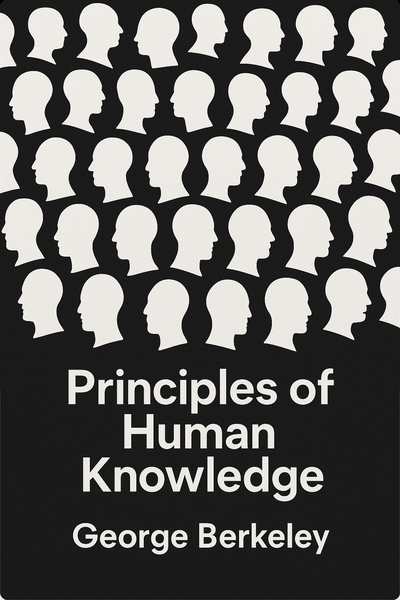
A Treatise Concerning the Principles of Human Knowledge (1710) introduces the radical metaphysical theory of immaterialism, which argues that the physical world possesses no existence independent of a perceiving mind. It contends that what we commonly mistake for “matter” is actually a collection of sensory perceptions coordinated by a divine spirit, thereby attempting to eliminate the gap between appearance and reality to defeat skepticism. By asserting that the very essence of sensible objects is to be perceived, it seeks to ground human knowledge in certain experience and reaffirm the immediate presence of a creator.
Who Should Read This?
- Deep thinkers who question the nature of reality
- Philosophy buffs curious about the history of ideas
- Anyone interested in how perception shapes reality
About the Author
George Berkeley was an Irish philosopher and Anglican bishop whose principal achievement centered on developing immaterialism, the theory that material substance doesn’t exist independently of perception. He authored several influential philosophical works beyond his 1710 treatise, most notably Three Dialogues Between Hylas and Philonous, which presented his immaterialist philosophy through dialogue form, and An Essay Towards a New Theory of Vision, which significantly contributed to the psychology of visual perception.